While institutionalized at St. Remy, Vincent painted what may be his most famous painting. But he saw it as a failure. He wrote "once again I allowed myself to be led astray into reaching for stars that are too big - another failure - and I have had my fill of that."
Images and paintings from the book, "The Yellow House: Van Gogh, Gauguin, and Nine Turbulent Weeks in Provence" by Martin Gayford.
Showing posts with label Van Gogh. Show all posts
Wednesday, March 30, 2011
Page 300
After leaving Arles, Vincent had another fit. This time while painting this quarry entrance near St. Remy.
Page 293
This is Dr. Rey, who oversaw Vincent after Van Gogh cut off his ear. Coincidence or creepy that Van Gogh painted the doctor's ear blood red?
Tuesday, March 29, 2011
Page 269
This is the portrait Vincent was painting when he cut off his ear.
Distressed by Gauguin's eminent plans to leave Arles, combined with the image of the woman rocking a cradle (that's what the rope in her hands is for), which he also imagined could be a Madonna on a boat rocking the sailors to sleep, plus several other mad thoughts led to Vincent's violent act, chronicled from pages 274-286.
Friday, March 25, 2011
Page 239 - 243
Gauguin painted Van Gogh in Painter of Sunflowers (Van Gogh has some of Gauguin's facial features).
And Van Gogh painted Gauguin in Man in Red Hat - a painting that was so unsuccessful, it was more than a century before it was even recognized as an authentic Van Gogh. (Note the poor nose. Vincent needed a model to do portraits.)
Labels:
Gauguin,
Man in Red Hat,
Painter of Sunflowers,
Van Gogh
Page 230-232
Gauguin and Van Gogh decided to trade self-portraits with the French painter, Charles Laval. This is the painting Laval made of himself...
This is Vincent's, dedicated to "l'ami" (although the two had never met)...
And this is what Gauguin created...
Page 227
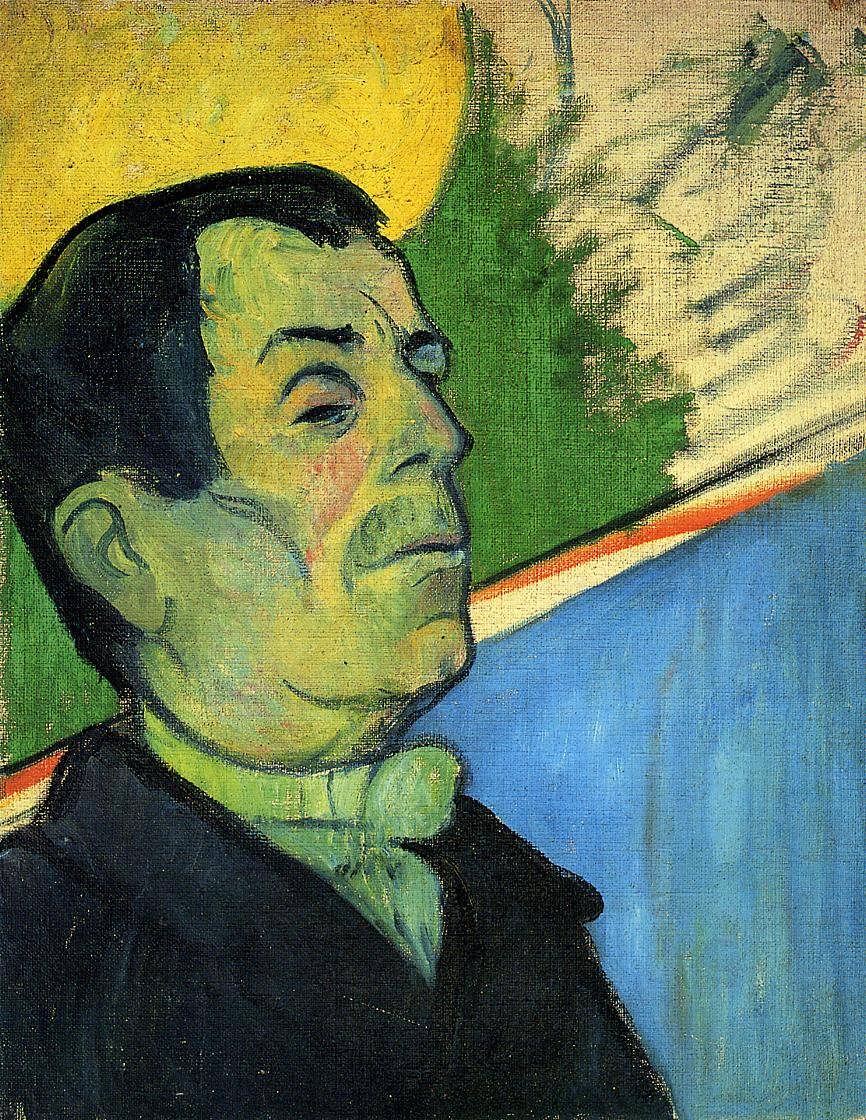
This was the third and final shared sitting between Van Gogh and Gauguin. The man's identity is not documented, but is likely Monsieur Louis, the local brothel-keeper.
This is what Vincent painted...
And this is was Gauguin's angle (funny he gave the brothel-keeper a faux halo via the painting in the background)...
Page 223-224
Vincent attended a ball at a dance hall in Arles. He apparently found it unnerving and made him feel claustrophobic. (Notice Madam Roulin on the far right looking at the viewer.)
Thursday, March 24, 2011
Pages 201-212
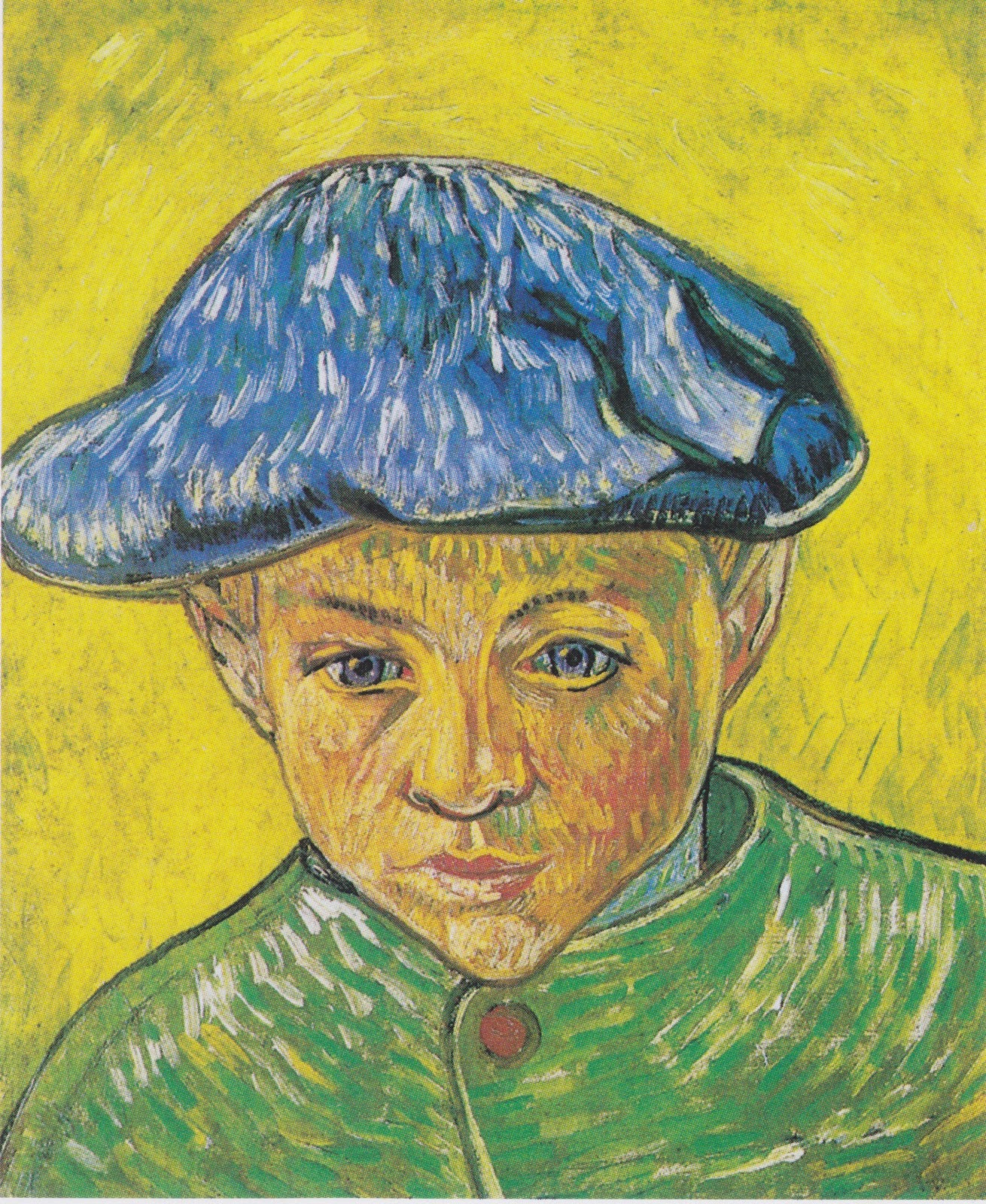
After painting Monsieur Roulin many times, and after the dual sitting with Gauguin to paint Madam Roulin, Vincent decided to paint the entire family.
Here is Monsieur Joseph Roulin in his postal uniform.
Madam Roulin and their 4-month old daughter, Marcelle...
Their 17-year-old son, Armand...
And their teenage son Camille...
Van Gogh could not afford to pay the Roulins for their sitting, so he gave them each a painting of themselves, plus this still life of pink oleanders and Emile Zola's La Joie de Vivre.
The Roulins were not a wealthy family. In fact, Vincent had more money coming from his brother Theo than the Roulins did each month.
"But Joseph soon accepted an offer from the Parisian dealer Ambroise Vollard for 450 francs a canvas. HAd they waited a little longer, the Roulins would have got much more."
Pages 197-198
As they had done with Madam Ginoux, Van Gogh and Gauguin had a dual sitting with Madam Roulin, the 37-year-old wife of the postmaster Vincent had painted numerous times.
Here is Gauguin's Madam Roulin (notice his painting Blue Trees in the background).
And here is Vincent's Madam Roulin. According to the author, those onions weren't really outside. Vincent just liked them as a symbol or rebirth.
Monday, March 21, 2011
Page 180
Van Gogh and Gauguin went for an evening walk. The setting sun and cyprus trees inspired Vincent. He sketched this is a letter...
And later painted Road with Cyprus and Stars...
Friday, March 18, 2011
Page 176
Vincent sketched this Study for Reclining Nude a year earlier in 1887. (Personally, I think it's hideous and quite gorilla-like.)
For Vincent "to be a painter was similar to being a priest or monk, with the exception that every couple of weeks you might go to the brothel in order to live a well-regulated, calm existence."
Page 166
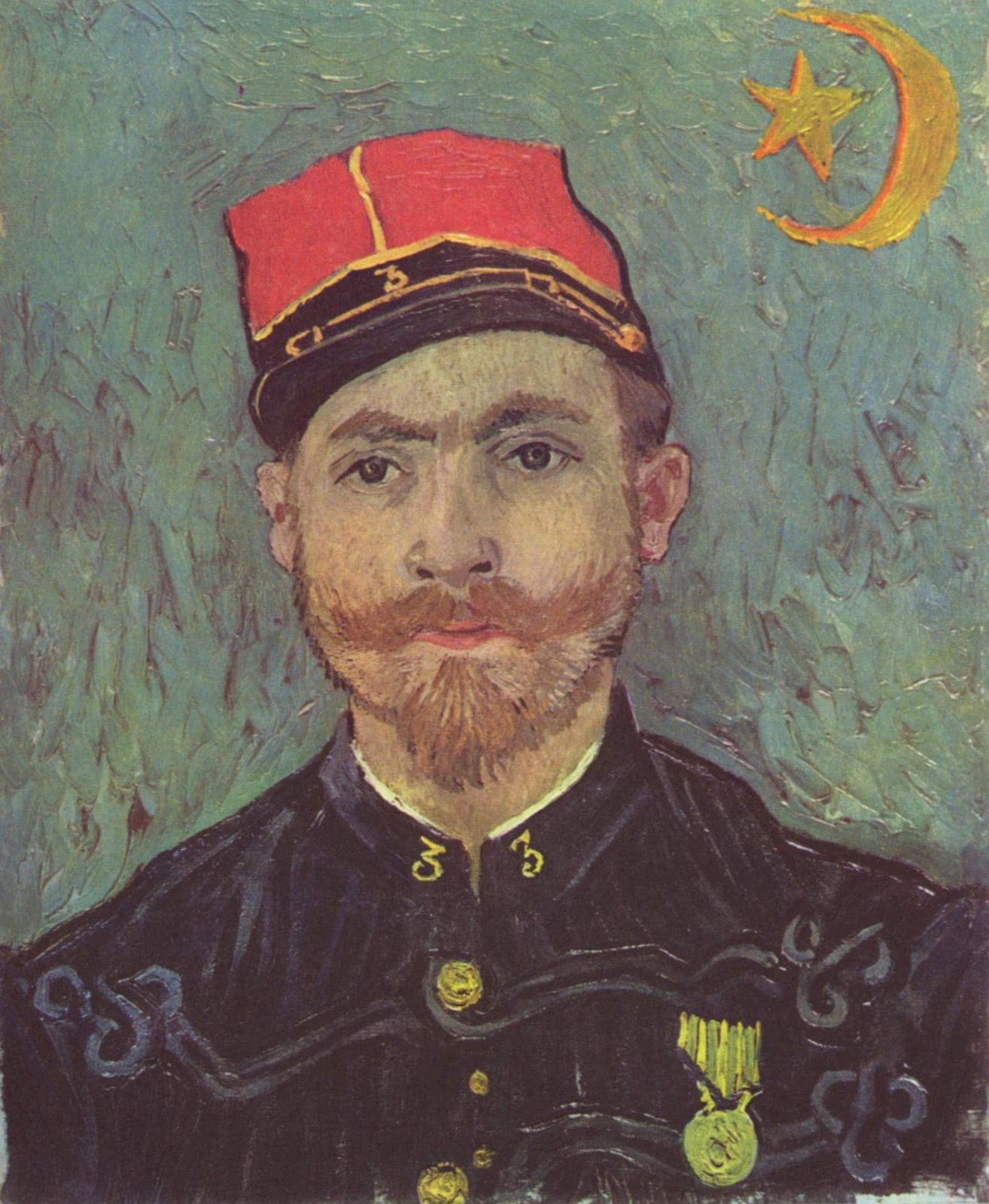
Eugène Boch was a Belgian painter, and one of Vincent's best friends, who had lived with him in Arles the summer before Gauguin arrived. Vincent's other close friend was Paul-Eugène Milliet.
These are the portraits Vincent painted of his two friends, which hung in his bedroom in the Yellow House. (Boch on top, Milliet below.)
Pages 160 and 163
Two of the most celebrated paintings in all of art came about because Vincent hated the cold, and on a chilly day, he decided to stay inside to paint rather than venture out as planned.
He painted his chair...
And then Gauguin's...
Strange as it sounds today, painting furniture as still-life instead of the classic foods like apples and pears was revolutionary.
Wednesday, March 16, 2011
Page 144
A bullfight in Arles. (Notice Madam Ginoux in the foreground and the bearded postal worker, Roulin in the lower center.)
Vincent wasn't too pleased with this picture. He didn't destroy it, but he didn't complete it. (Notice the unpainted material on the face of the woman in the lower right.)
Tuesday, March 15, 2011
Page 140
Vincent painted this picture a few months after his father died. It is his father's Bible. "The candle stood for the ending of Theodorus can Gogh's life and the lost power of the holy book. Beside it was the new source of truth, a yellow paperback novel of Vincetn's that was coming apart at the spire through constant reading. Its title was legible: La joie de vivre by Emile Zola."
Subscribe to:
Posts (Atom)